![Tiny Soil Microbes May Save Salty Farms [New Hope]](https://giglegravity.site/wp-content/uploads/2026/07/Tiny-Soil-Microbes-May-Save-Salty-Farms-New-Hope.jpg)
Soil Microbes May Help Crops Survive Salty Farmland
Scientists have found that helpful soil bacteria may naturally protect crops from salt stress, offering a promising way to support climate-resilient agriculture as farmland becomes increasingly affected by soil salinity.
A research team involving scientists from the University of East Anglia (UEA) discovered that certain naturally occurring soil bacteria can improve a plant’s ability to grow in salty soil conditions. The study was led by Chinese researcher Dr. Yanfen Zheng.
Salty soil is one of the fastest-growing problems in modern farming. When too much salt builds up in the soil, plants struggle to absorb water and nutrients. This can reduce crop growth, weaken plant health, and lower agricultural productivity.
The findings suggest that beneficial bacteria, also known as plant-growth-promoting bacteria, could help crops become stronger without relying only on chemical treatments. These microbes may support salt tolerance, improve root development, and help plants survive in difficult environments.
This discovery could open new possibilities for sustainable farming, especially in regions where climate change, poor irrigation, and rising soil salt levels are making food production harder. By using natural soil microbes, farmers may one day protect crops in a safer, cheaper, and more environmentally friendly way.
Microbes Reveal a New Way to Protect Crops from Salt Stress
Researchers also identified a previously unknown mechanism through which beneficial soil microbes help crops survive in salty soil conditions. These microbes were found to support important crops such as maize, tomato, and rapeseed when exposed to salt stress.
This discovery could be important for the future of sustainable agriculture. As more farmland becomes damaged by soil salinity, farmers may need natural ways to grow food in difficult environments. Using plant-supporting bacteria could help improve crop resilience, protect plant growth, and make it possible to produce food on land that is too salty for normal farming methods.
Rising Soil Salt Levels Put Food Production at Risk
Soil salinity is becoming a serious threat to global agriculture. The problem is growing because of climate change, poor or repeated irrigation practices, and rising sea levels. When too much salt builds up in farmland, plants cannot grow properly. Their roots become damaged, their development slows, and crop yields can fall sharply.
Professor Jonathan Todd, from the University of East Anglia’s School of Biological Sciences and the Quadram Institute at Norwich Research Park, explained that salt accumulation in agricultural land is a major and worsening issue. He warned that salt stress can weaken plants, harm root systems, reduce harvests, and place pressure on global food security.
Scientists already know that plants depend on helpful communities of microbes around their roots, known as the root microbiome. These beneficial soil microbes help plants deal with environmental stress, including harsh soil conditions. However, researchers have not fully understood how these plant-microbe relationships work or whether they behave the same way across different crops, soils, and farming environments.
The new findings suggest that plants may naturally attract beneficial bacteria when growing in salty soil conditions. These bacteria appear to activate internal changes inside the plant, helping strengthen its physical structure, improve stress tolerance, and increase crop resilience.
If this natural process can be used in farming, it could support a new generation of climate-resilient agriculture. This approach may help farmers protect crops, improve sustainable food production, and grow food in areas affected by increasing soil salt levels.
Salt-Stressed Roots Attract Helpful Bacteria
Researchers studied root microbiomes from several crop species grown in different soil types to understand how plants and microbes work together under difficult conditions.
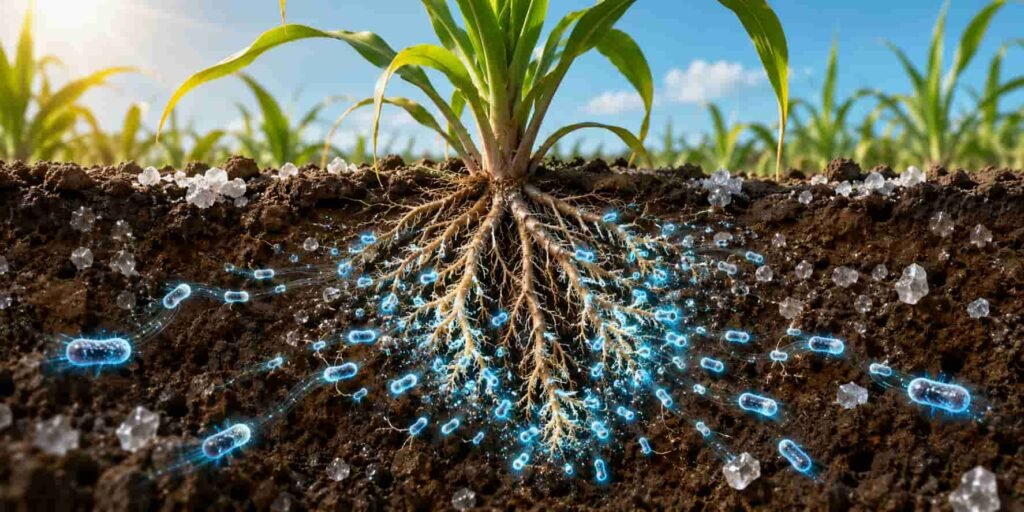
They found that a group of naturally occurring bacteria, called pseudomonads, repeatedly gathered around plant roots exposed to salt stress. This pattern was seen in different crops, including maize, tomato, and rapeseed.
The findings suggest that this is not limited to one crop. Instead, it may be a common biological response in which plants under salty soil conditions attract beneficial root microbes that could help improve plant resilience, salt tolerance, and crop survival.
Special Genes Help Bacteria Survive in Salty Soil
Genetic analysis helped explain why pseudomonads can survive and work effectively in salty environments.
Professor Todd explained that, compared with many other soil microbes, pseudomonads contain specialized genes that allow them to tolerate high salt levels. These include sodium transport systems and other stress-resistance mechanisms that help the bacteria survive under salt stress.
These genetic features may allow beneficial bacteria to support plants growing in saline soil, improving plant resilience, salt tolerance, and overall crop survival in difficult farming conditions.
Read Also: Physicists Reveal Fractional Fermi Sea [Quantum]Beneficial Bacteria Improve Root Growth and Crop Yield
Researchers tested selected pseudomonad strains on soybean plants to see whether these beneficial soil bacteria could help crops grow better in salty soil conditions. The tests were carried out in both greenhouse studies and field trials.
The results showed that the bacteria successfully colonized the plant roots and improved soybean growth under salt stress. Plants treated with these plant-growth-promoting microbes developed stronger root systems, showed better overall plant development, and produced higher yields than untreated plants grown in saline soils.
These findings suggest that pseudomonads could become a useful natural tool for improving crop resilience, salt tolerance, and sustainable agriculture in areas affected by rising soil salinity.
Beneficial Bacteria Strengthen Plant Roots in a Surprising Way
Researchers were surprised to find that the bacteria did not protect plants by lowering salt levels inside their tissues. For many years, scientists believed that plants mainly survive soil salinity by controlling sodium levels and keeping harmful salt away from sensitive plant cells.
However, the study found no clear evidence that these beneficial bacteria changed sodium transport or improved the plant’s ion balance. Instead, the microbes helped plants in a different way.
The bacteria encouraged the plants to produce more lignin, a strong natural material that helps build and support plant cell walls. In bacteria-treated plants, the roots showed a major rise in lignin content, with some levels increasing by more than 30 percent under salt stress.
This suggests that pseudomonads may protect crops by strengthening their root structure, improving plant resilience, and helping crops survive better in salty soil conditions.
Lignin Helps Plants Build Natural Strength
Lignin is a strong, woody substance found in plant cell walls. It works like a natural support system by strengthening plant tissues and helping them survive environmental stress, including salt stress.
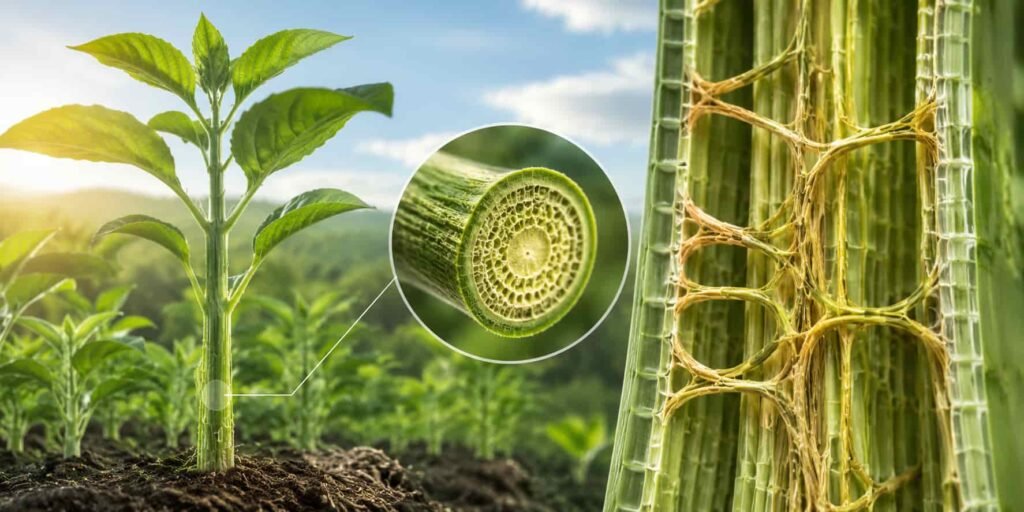
Researchers also identified the main genes involved in increasing lignin production. When these genes were artificially made more active, the plants grew better in salty soil conditions.
This shows that higher lignin levels may improve root strength, support plant resilience, and help crops tolerate soil salinity more effectively.
Microbial Treatments Could Support Farming in Salty Soils
Researchers found that lignin production is essential for the protective effect of beneficial soil bacteria. Plants that could not produce lignin did not gain the same benefits from pseudomonads, showing that this natural substance plays a key role in helping crops tolerate salt stress.
Professor Jonathan Todd said the discovery could create new opportunities for sustainable agriculture. By using naturally occurring microbes such as pseudomonads, scientists may be able to develop bio-based treatments that help crops grow in saline soils without relying heavily on chemical inputs.
This could be important for the future of farming, as large areas of farmland are already affected by soil salinity, and many more are at risk. Microbial solutions may help protect crop yields, improve plant resilience, support climate-resilient agriculture, and strengthen global food security.
The findings were published in Science Advances in a study titled “Pseudomonads associated to salt-stressed plants facilitate stress adaptation of soybean through enhanced lignin biosynthesis.”
Summary
Helpful soil bacteria, especially pseudomonads, may help crops survive in salty soils by improving plant strength and resilience.Researchers found that these microbes gather around salt-stressed roots and support crops like soybean, maize, tomato, and rapeseed.Instead of reducing salt inside plants, the bacteria increase lignin production, which strengthens root structure.This natural process could lead to bio-based farming treatments that reduce chemical use and protect crop yields.The discovery may support climate-resilient agriculture and help farmers grow food on salt-affected farmland.