![This Pesticide Could Erase Future Bumblebees [Warning]](https://giglegravity.site/wp-content/uploads/2026/07/This-Pesticide-Could-Erase-Future-Bumblebees-Warning.jpg)
Pesticide Exposure May Threaten Bumblebee Reproduction
A widely used pesticide may be weakening the ability of bumblebees to reproduce, creating another serious risk for one of agriculture’s most valuable pollinators.
Bumblebees are small, but their contribution to global food production is enormous. Nearly one-third of the world’s food supply depends on pollination by bees and other insects. However, bee populations are increasingly affected by chemical exposure, habitat loss, and other environmental threats.
Modern crop protection chemicals help farmers control pests and improve agricultural yields, but some may also harm the insects needed for successful harvests. One example is sulfoxaflor, a newer insecticide introduced in 2013. Farmers use it to control sap-feeding pests, including aphids, on crops such as corn and soybeans.
Although sulfoxaflor is effective in pest control, research shows that it can be toxic to bees. Scientists are now studying how even low-dose exposure may cause molecular changes that interfere with bee fertility, reproductive health, and the long-term survival of bumblebee colonies.
These findings highlight the need for safer pesticide management, stronger pollinator protection, and farming methods that balance crop productivity with biodiversity and ecosystem health.
Low-Dose Pesticide Exposure Disrupts Bumblebee Reproductive Genes
Researchers at the Georgia Institute of Technology have found that sulfoxaflor, a commonly used pesticide, may change gene activity and weaken reproductive function in bumblebees.
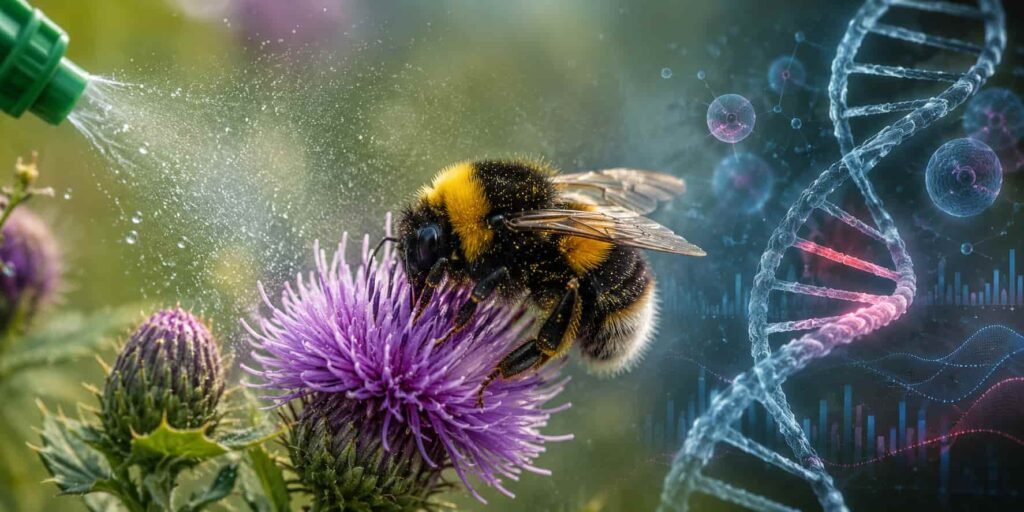
In the U.S. Department of Agriculture-funded study, worker bees were exposed to small amounts of the chemical. Scientists then examined their gene expression to understand how the pesticide affected important biological processes.
The most significant changes were found in the bees’ ovarian tissue. This suggests that sulfoxaflor may disturb normal reproductive development and reduce the number of offspring a colony can produce. Over time, lower reproduction rates could contribute to a decline in bee populations and threaten long-term colony survival.
To study these effects, researchers quickly froze the bee tissues and examined their RNA, which shows which genes are active inside cells. They also used computational models and biological data analysis to identify the body systems most affected by pesticide exposure.
Professor Michael Goodisman explained that the study is important because it connects changes at the molecular level with visible effects on individual bees and entire colonies. This connection gives scientists a clearer understanding of how agricultural chemicals may damage bee health, fertility, and pollinator populations.
Overall, the findings show that even low-dose exposure to sulfoxaflor may interfere with bumblebee reproduction by altering the activity of genes linked to ovarian function.
Protecting Crops Without Harming Pollinators
The research highlights a major challenge in modern agriculture: farmers must control harmful crop pests while protecting beneficial insects that support food production.
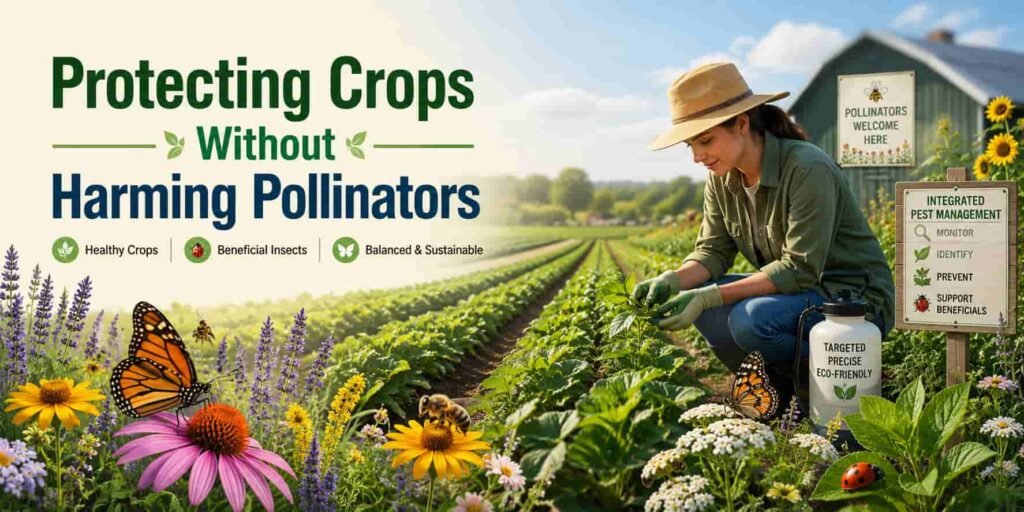
Sarah Orr, who led the study while working as a postdoctoral researcher at Georgia Tech, explained that pesticides are important for pest management, but they may also harm non-target insects, including bumblebees. She said researchers must develop practical methods that protect crops without damaging pollinators, agricultural ecosystems, or the food systems that depend on them.
Orr also stressed that strong and healthy bee populations are necessary for effective pollination. When bees produce fewer offspring, their colonies may become smaller. As a result, fewer bees will be available to pollinate crops, which could reduce crop yields, threaten food security, and weaken long-term ecosystem health.
Overall, the findings show that successful farming requires a careful balance between pesticide use, crop protection, and pollinator conservation.
Growing Environmental Pressures on Bumblebees
Bumblebees face several serious threats, and pesticide exposure is only one of them. Rising temperatures, climate change, and more frequent heatwaves are placing additional pressure on bee populations and other important pollinators.
By studying how chemicals such as sulfoxaflor affect bee biology, reproduction, and overall pollinator health, scientists hope to support safer agricultural practices. The main goal is to control damaging crop pests while protecting the beneficial insects that support pollination, food production, biodiversity, and long-term food security.
Read Also: Europe’s Most Active Volcano Has a Secret Origin [Revealed]Summary: This Pesticide Could Erase Future Bumblebees [Warning]
Sulfoxaflor, a widely used pesticide, may disrupt gene activity and reduce bumblebee reproduction, even at low exposure levels.The strongest effects were found in ovarian tissue, raising concerns about fewer offspring and weaker colony survival.Because bumblebees support pollination, declining populations could harm crop yields, food production, and food security.Farmers therefore need safer pest-control methods that protect crops without harming beneficial pollinators.Other threats, including climate change, habitat loss, and heatwaves, make stronger bee conservation even more important.