![Quantum Sensor Could Reveal Dark Matter [Breakthrough]](https://giglegravity.site/wp-content/uploads/2026/07/Quantum-Sensor-Could-Reveal-Dark-Matter-Breakthrough.jpg)
Quantum Sensor Breakthrough Could Improve Dark Matter Searches
Researchers at Imperial College London have tested a new prototype quantum sensor that may help scientists find extremely faint signals from dark matter and the early universe.
The sensor uses a method called atom interferometry, where lasers track the movement of atoms with very high precision. In this study, scientists compared two long-baseline atom interferometers to see whether they could remove strong experimental noise from the results.
The test showed that this comparison method can successfully filter out unwanted background noise, even when the original measurements seem too messy to understand. This means researchers may still recover useful scientific signals hidden inside very noisy data.
The breakthrough is important because future quantum detectors will need to work in real-world conditions, not only in perfect laboratory settings. By proving that meaningful signals can be separated from overwhelming noise, this research brings scientists closer to building more powerful tools for studying dark matter, cosmic signals, quantum sensing, and the history of the early universe.
Quantum Sensors May Open a New Window Into the Universe
A major step forward in quantum sensing could help scientists search for gravitational waves from the early universe and possible signs of unusual forms of dark matter.
The research is part of the Atom Interferometer Observatory and Network, known as AION. This UK-wide project, led by Imperial College London, is developing advanced quantum sensor technologies for future discoveries in physics, cosmology, and dark matter research.
The study was published in Nature.
Detecting Weak Signals Hidden in Noise
One of the biggest questions in modern physics is what the universe is truly made of. Scientists are also trying to detect new types of gravitational waves, which are tiny ripples in spacetime caused by extremely powerful events in the cosmos.
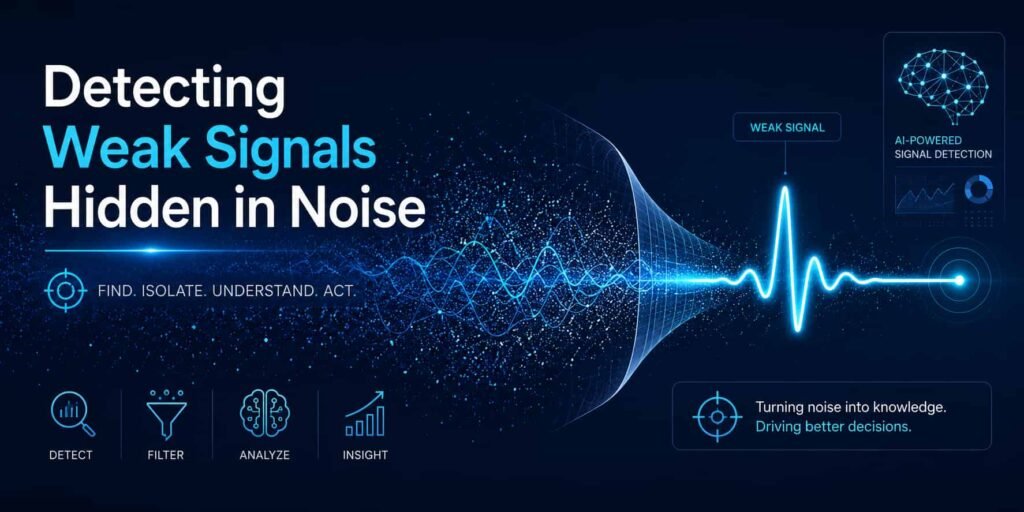
These searches are difficult because the signals are incredibly weak. They can easily be buried under strong background noise or experimental interference. To make progress, researchers need reliable ways to separate real scientific signals from unwanted noise.
How Atom Interferometers Work
One promising technology is the long-baseline atom interferometer. This instrument uses lasers to split and later recombine clouds of atoms. By doing this, scientists can measure very small changes in atomic motion with extremely high precision.
The method compares two separate atom clouds placed in different locations but controlled by the same laser system. If the two clouds behave differently, it may point to something new, such as the effect of a hidden dark matter field.
The Main Challenge: Laser Phase Noise
A major problem comes from the laser itself. During operation, the laser produces phase noise, which is much stronger than the tiny signals scientists want to measure. This makes the real signal almost impossible to detect using a single measurement.
For years, researchers have suggested a solution: compare two atom interferometers and cancel out the noise that both instruments share. This process is known as noise cancellation or common-mode noise rejection.
The new research is important because it shows that this idea can work under realistic experimental conditions, not only in ideal laboratory models. This gives scientists stronger confidence that future quantum detectors could be used to search for early-universe gravitational waves, exotic dark matter, and other hidden signals from the universe.
Read Also: AI Vaccine Clears First Human Test [Breakthrough]Quantum Sensors Are Moving From Theory to Reality
Researchers have understood for many years that quantum sensors could help explain some of the deepest mysteries of the universe. However, only recent progress in technology has made it possible to build sensors with the resolution, precision, and stability needed for real scientific use.
Dr. Charles Baynham from Imperial College London explained that the team is proud of the progress made in turning these advanced sensors into practical tools. He also suggested that, in the future, tiny signals measured from atoms could help scientists learn about huge cosmic events, such as black hole mergers that happened millions of years ago.
Testing Noise Cancellation With Ultracold Atoms
To test the idea, the research team created a small experimental system inside the Imperial Ultracold Strontium Laboratory.
The setup used two separated clouds of ultracold strontium-87 atoms. Both atom clouds were measured with the same ultrastable clock laser. This design was made to copy the conditions expected in future large-scale long-baseline atom interferometers, where controlling noise will be one of the biggest challenges.
To make the test more difficult, the researchers deliberately added strong phase noise to the system. This extra noise was much higher than the level normally produced by clock lasers. The purpose was to recreate the noisy environment that future quantum detectors may face.
Recovering Signals From Heavy Noise
When each atom interferometer was studied separately, the results appeared almost useless. The important interference patterns were hidden under overwhelming experimental noise.
However, when the two interferometers were compared together, the hidden signal became visible again. Although each individual dataset looked random, the connection between the two measurements revealed the true behavior of the system.
The combined result reached the basic limit allowed by quantum physics. This confirmed that the noise-cancellation method worked as expected.
Simulating Dark Matter and Gravitational Wave Signals
The team then added a small oscillating signal to the experiment. This signal was designed to act like the possible effect of a passing gravitational wave or a dark matter field.
Even when neither interferometer could provide useful information on its own, the added signal was still clearly detected when both systems were analyzed together.
This result is important because it shows that future quantum sensors, atom interferometers, and long-baseline detectors may be able to find extremely weak signals from dark matter, gravitational waves, black holes, and the early universe.
A New Step Toward Large-Scale Quantum Sensors
The study marks an important step in the development of long-baseline atom interferometers. It provides the first experimental proof of a key idea behind these advanced instruments and helps solve one of the biggest technical challenges in building them.
Through the AION program, researchers are working to turn this early-stage technology into larger and more powerful systems. These future instruments could help scientists study parts of the universe that are currently beyond the reach of existing tools.
AION is also part of a wider international effort. It works closely with the MAGIS project at Fermilab and other research groups in the United States. Together, these teams are developing large-scale atom interferometers for fundamental physics, quantum sensing, and the search for new discoveries about the universe.
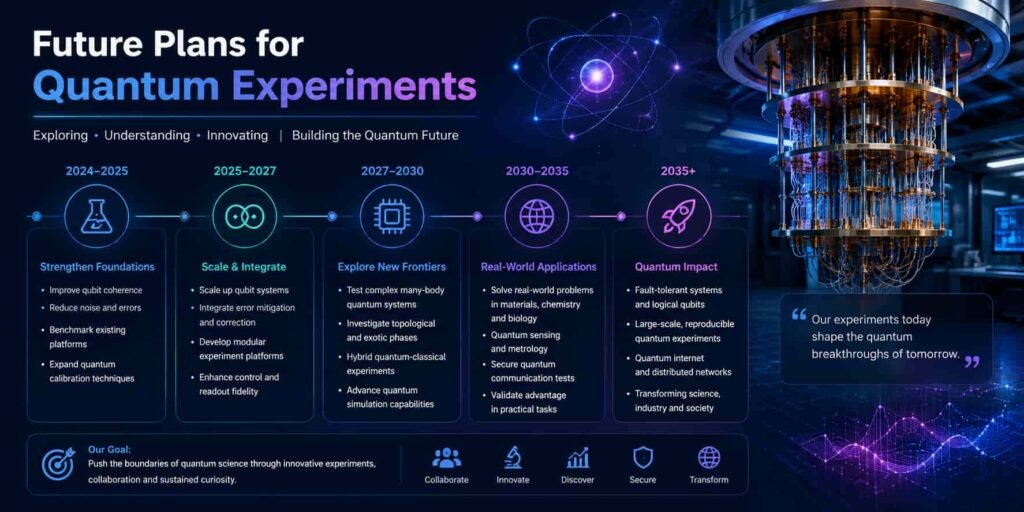
Future Plans for Quantum Experiments
One major future proposal is the Atom Interferometry CERN Experiment, also known as AICE. This project would use similar quantum sensor technology over much longer distances. If it is built, AICE could open a new research direction at CERN by using atom interferometry to investigate deep questions in physics. It may also become one of the largest quantum experiments ever created.
Dr. Richard Hobson, co-lead of the Ultracold Strontium Laboratory at Imperial College London, explained that the team has shown how highly precise tools such as atomic clocks and atom interferometers can be used in new ways. These instruments could help scientists explore hidden parts of the universe, including areas linked to dark matter and other unknown physical phenomena.
He noted that the current system is still a prototype. However, if this technology is scaled up at major laboratories such as CERN or Fermilab, it could help answer some of the most important unanswered questions in modern physics.
Searching for Dark Matter and New Gravitational Waves
Imperial researchers are now continuing their work on larger systems as part of a global effort to build the next generation of quantum sensors. In the future, these detectors could study gravitational waves at frequencies that current observatories cannot detect. They may also help search for new types of matter, giving scientists a fresh way to understand the cosmos.
Professor Oliver Buchmueller, Principal Investigator of the AION collaboration at Imperial, said the work is a major milestone for future large-scale quantum sensing facilities. He explained that the experiment shows, under realistic conditions, a key method needed for next-generation atom interferometer projects, including MAGIS at Fermilab and the proposed AICE facility at CERN.
Overall, the research shows that quantum sensing, atomic clocks, and atom interferometry could become powerful tools for studying dark matter, gravitational waves, and some of the deepest mysteries of the universe.
Read Also: Your WiFi May Recognize Who You Are [Shocking]AION Research Partners and Funding Support
The AION collaboration is led by Imperial College London and brings together experts from several major UK research institutions. The team includes researchers from the University of Birmingham, University of Cambridge, University of Liverpool, King’s College London, University of Oxford, and the STFC Rutherford Appleton Laboratory.
The project is supported by the Quantum Technologies for Fundamental Physics program, also known as QTFP. This program is a joint initiative between STFC and EPSRC, designed to support advanced research in quantum technology, fundamental physics, and next-generation quantum sensing.
Summary: Quantum Sensor Could Reveal Dark Matter [Breakthrough]
Imperial College London researchers tested a prototype quantum sensor using atom interferometry to detect extremely weak signals hidden in noise.The experiment showed that comparing two long-baseline atom interferometers can cancel shared laser phase noise and recover useful data.This breakthrough supports future searches for dark matter, gravitational waves, and signals from the early universe.The work is part of the AION collaboration, linked with projects such as MAGIS at Fermilab and the proposed AICE facility at CERN.Overall, the study moves quantum sensing closer to real-world use in advanced fundamental physics research