![Omega-3 Brain Health Myth Exposed [New Study]](https://giglegravity.site/wp-content/uploads/2026/07/Omega-3-Brain-Health-Myth-Exposed-New-Study.jpg)
Fish Oil Raises Brain Omega-3 Levels, but Study Finds No Clear Cognitive Benefit
Many people take fish oil supplements because they believe omega-3 fatty acids can support brain health, memory, and thinking ability. In the United States, people spend more than $1 billion every year on these supplements, mostly because omega-3s are often linked with better cognitive function and protection against age-related brain decline.
However, new research from Keck Medicine of USC suggests that the benefits may not be as strong as many people expect. In a major two-year study published in eBioMedicine, researchers found that fish oil supplements did increase omega-3 levels in the brain. But this increase did not lead to better memory, improved cognitive performance, or protection against brain shrinkage connected with Alzheimer’s disease.
The study focused on older adults who had a higher risk of developing Alzheimer’s. Even though the omega-3s successfully reached the brain, researchers did not find clear evidence that the supplements improved important measures of brain function, mental sharpness, or neurodegenerative disease risk.
The findings challenge common claims that fish oil supplements can strongly protect the aging brain. While omega-3 nutrients are still important for general health and brain cell connections, this study suggests that taking fish oil alone may not be enough to prevent memory loss, slow cognitive decline, or reduce Alzheimer’s-related brain changes.
High-Dose Fish Oil Shows No Clear Protection Against Alzheimer’s-Related Brain Changes
A two-year placebo-controlled and double-blinded clinical trial found that high-dose omega-3 supplements did not improve memory, cognitive performance, or reduce brain cell loss in areas of the brain linked to Alzheimer’s disease.
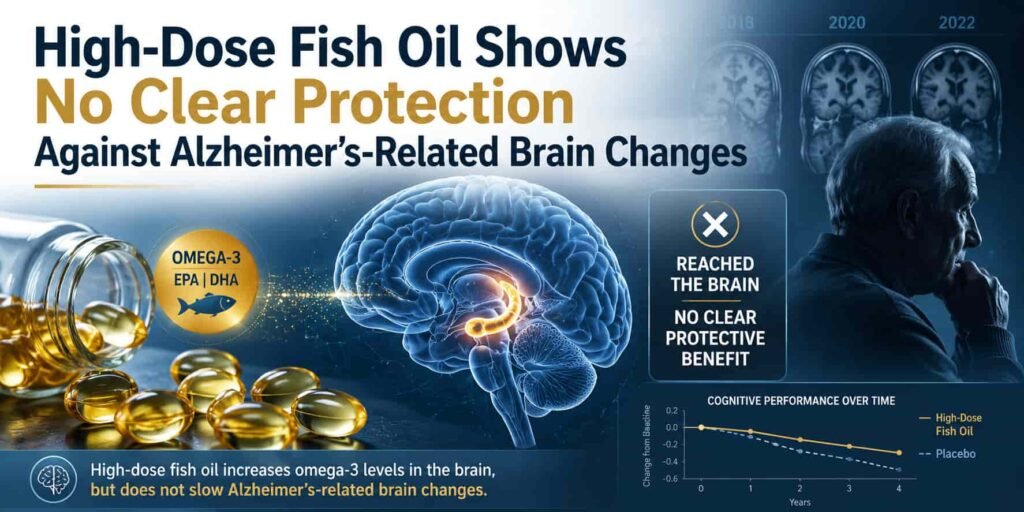
Dr. Hussein Naji Yassine, director of the USC Center for Personalized Brain Health and lead investigator of the study, said the results do not support the idea that fish oil supplements can protect the brain from Alzheimer’s. He explained that although omega-3 fatty acids help build brain cell connections that are important for thinking, learning, and cognition, the study did not find enough evidence to recommend fish oil as a way to prevent Alzheimer’s-related cognitive decline.
The findings suggest that while omega-3s remain important for normal brain function, taking fish oil supplements alone may not be an effective strategy for protecting brain health, preventing memory loss, or slowing neurodegenerative changes.
DHA From Fish Oil Successfully Entered the Brain
The study followed 365 adults aged 55 to 80 who did not often eat fish, which is one of the main dietary sources of omega-3 fatty acids. All participants were considered at higher risk for Alzheimer’s disease. Almost half of them, about 47%, carried the APOE4 gene, which is the strongest known genetic risk factor for late-onset Alzheimer’s disease.
The participants were randomly placed into two groups. One group received a daily fish oil supplement, while the other received a placebo. Each fish oil supplement contained 2,000 mg of docosahexaenoic acid, also known as DHA, an important omega-3 fatty acid linked to brain function, cognition, and healthy brain cell communication.
A key aim of the study was to find out whether DHA from the supplements could actually reach the brain. To check this, researchers measured DHA levels in the cerebrospinal fluid, the fluid that surrounds the brain and spinal cord.
After six months, DHA levels in this fluid increased by an average of 17%. This showed that the omega-3 nutrient from fish oil had successfully reached the central nervous system and entered the biological environment around the brain.
DHA Did Not Improve Memory or Slow Brain Shrinkage
Even though DHA from the fish oil supplements reached the brain, it did not lead to clear improvements in memory, thinking ability, or overall cognitive function.
Researchers tested the participants’ memory and mental performance at the beginning of the study and again after two years. The results showed that people who took DHA supplements did not perform better on cognitive tests than those who received a placebo.
The brain imaging scans showed the same pattern. Fish oil did not slow hippocampal shrinkage, which is the shrinking of the hippocampus, a brain area strongly linked to memory formation, brain aging, and Alzheimer’s disease risk.
Overall, the findings suggest that raising omega-3 levels in the brain may not be enough to improve cognitive health or protect against Alzheimer’s-related brain changes.
Why Omega-3 Supplements May Not Be Enough for Brain Protection
The results raised an important question: why did omega-3 fatty acids reach the brain but fail to produce clear improvements in brain health, memory, or cognitive function?
Dr. Hussein Naji Yassine and his research team believe the answer may involve how omega-3s are consumed. Based on earlier studies, they suggest that omega-3s may work better when they come from a complete Mediterranean-style diet instead of being taken only as a fish oil supplement. This diet naturally includes foods rich in omega-3 nutrients and has been linked to a lower risk of Alzheimer’s disease.
Researchers are now studying how the brain absorbs, processes, and uses omega-3s. They are also looking at whether poor health, diet quality, genetic risk, and age can affect the brain’s ability to use these nutrients properly.
Yassine explained that the goal is to better understand omega-3 metabolism in the brain and develop future treatments that may help the brain use these nutrients more effectively to support cognitive performance, protect brain function, and slow Alzheimer’s-related decline.
Healthy Habits Remain Important for Protecting the Aging Brain
Although this study did not directly test lifestyle factors, the researchers stressed that good overall health is still one of the strongest ways to support brain function and lower Alzheimer’s disease risk.
Dr. Hussein Naji Yassine explained that staying healthy across life may help protect the brain. Important habits include regular exercise, quality sleep, and a balanced diet. He compared the brain to a car engine, saying that the body needs regular care just like a car needs maintenance and clean oil. When health problems in other parts of the body are ignored, the brain may become more vulnerable to cognitive decline, memory loss, and reduced mental performance.
The study also included several USC researchers, including Lina D’Orazio, PhD, a clinical psychologist and neuropsychology specialist at Keck Medicine; Lon Schneider, PhD, professor of psychiatry and behavioral sciences at the Keck School of Medicine of USC; Michael Harrington, MD, professor of research neurology at the Keck School; and Meredith Braskie, PhD, assistant professor of neurology at the Keck School.
Overall, the message is clear: while fish oil supplements may not prevent Alzheimer’s on their own, a healthy lifestyle may still play an important role in protecting brain health, supporting cognition, and reducing the risk of Alzheimer’s-related brain changes.
Read Also: Hidden Brain Activity Seen Under Anesthesia [Discovery]Summary: Omega-3 Brain Health Myth Exposed [New Study]
Fish oil supplements increased omega-3/DHA levels in the brain, but they did not improve memory, thinking ability, or cognitive performance.The two-year clinical trial found no clear protection against hippocampal shrinkage, brain cell loss, or Alzheimer’s-related brain aging.Researchers suggest omega-3s may work better as part of a full Mediterranean-style diet rather than as a standalone supplement.The study concludes that fish oil alone is not enough to prevent cognitive decline or reduce Alzheimer’s disease risk.Healthy habits such as regular exercise, quality sleep, and a balanced diet remain important for long-term brain health.