![Propranolol May Cut Stroke Risk in Women [New Study]](https://giglegravity.site/wp-content/uploads/2026/07/Propranolol-May-Cut-Stroke-Risk-in-Women-New-Study-1.jpg)
Propranolol Linked to Lower Stroke Risk in Women With Migraine
A preliminary study suggests that propranolol, a medicine commonly prescribed for high blood pressure and migraine prevention, may help lower the risk of ischemic stroke in women with migraine.
The research is scheduled to be presented at the American Stroke Association’s International Stroke Conference 2025, taking place in Los Angeles from 5 to 7 February 2025. The conference brings together leading researchers and healthcare professionals who study stroke, brain health, and cardiovascular disease.
Researchers found that women taking propranolol to prevent migraines had a lower risk of ischemic stroke, particularly those who experienced migraine without aura. An ischemic stroke occurs when a blood clot blocks blood flow to the brain.
However, the same protective association was not observed in men. The findings suggest that propranolol may affect stroke risk differently depending on a person’s sex.
Because the study is still preliminary, further research is needed to confirm the results and explain how propranolol may reduce stroke risk in women with migraine.
Propranolol May Lower Stroke Risk in Women With Migraine
Migraine headaches affect millions of people, but they are around three times more common in women than in men. Migraine is more than a severe headache. It is a disabling neurological condition that has also been linked to a higher risk of cardiovascular disease and stroke.
The beta blocker propranolol is commonly used to control high blood pressure and prevent recurring migraines. However, researchers are still investigating whether this medication can also reduce the overall risk of stroke in people with migraine.
Migraine as an Overlooked Cardiovascular Risk
Lead researcher Mulubrhan Mogos, an assistant professor at Vanderbilt University School of Nursing, explained that migraine is often overlooked as a possible risk factor for heart and blood vessel problems.
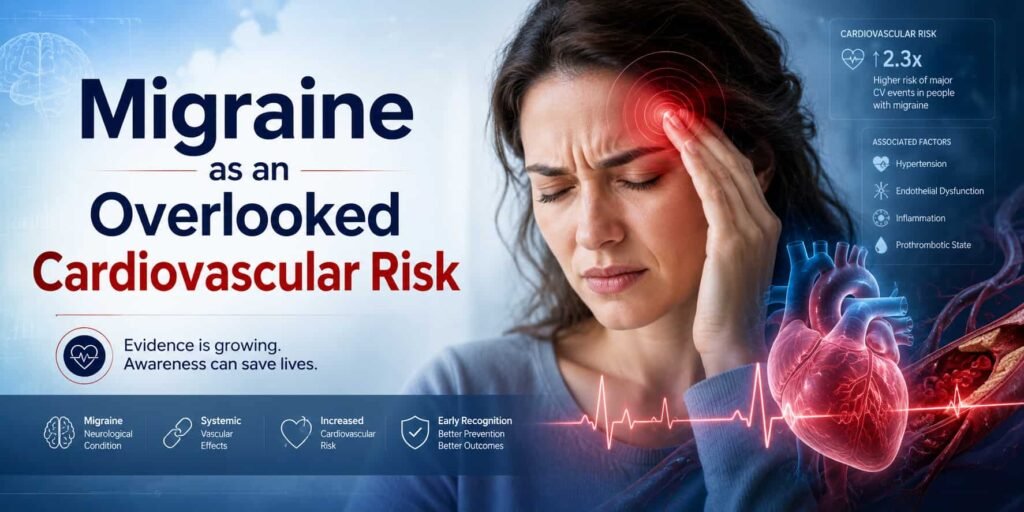
According to Mogos, preventive treatment options for migraine were limited until recent years. The findings suggest that propranolol may provide additional benefits for women, especially those who experience migraine without aura.
This possible connection is important because women experience a much higher migraine burden and may also face an increased risk of ischemic stroke, which occurs when a blood clot blocks blood flow to the brain.
Healthcare Inequality and Treatment Access
Migraine has a particularly strong impact on women from historically under-resourced communities. Frequent and severe attacks may make it difficult for affected women to continue their education, attend work regularly, or maintain stable employment.
Although newer migraine treatments have shown promising results, their high cost may prevent many patients from accessing them. Propranolol could therefore be an important and more affordable option, particularly for women with limited access to specialised healthcare.
Study Reviews More Than Three Million Health Records
Researchers analysed more than three million electronic health records collected from two major healthcare databases.
They compared patients with migraine who later developed a stroke with similar migraine patients who did not experience a stroke. The researchers then examined whether the patients had received propranolol for migraine prevention and whether the medication was associated with a lower stroke risk.
The research team first studied the relationship between propranolol and all types of stroke. They then focused specifically on ischemic stroke.
After adjusting the results for possible confounding factors, the researchers found a meaningful association between propranolol use and a reduced risk of ischemic stroke. The protective link appeared stronger for ischemic stroke than for stroke overall.
Key Findings
The findings suggest that propranolol may offer benefits beyond migraine prevention. It could potentially help lower the risk of ischemic stroke in women with migraine, particularly among women who have migraine without aura.
However, further clinical research is needed to confirm the relationship and determine whether propranolol directly prevents stroke. Patients should not begin, stop, or change any medication without speaking to a qualified healthcare professional.
Propranolol Linked to Lower Ischemic Stroke Risk in Women
After considering several factors that could influence the results, researchers found a strong connection between propranolol use and a lower risk of ischemic stroke in women with migraine.
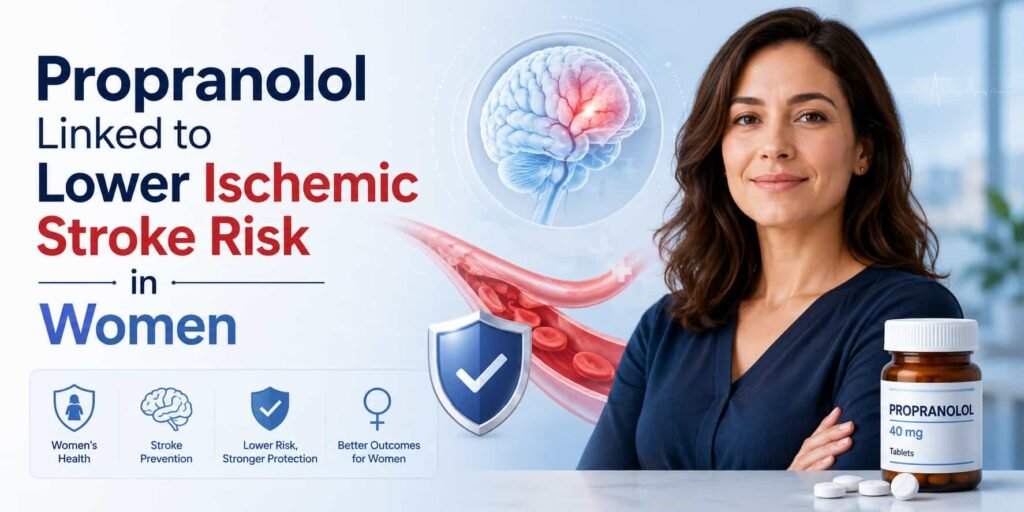
The analysis accounted for age, sex, race, high blood pressure, diabetes, and hormonal factors such as pregnancy and birth control use.
Stroke Risk Fell Significantly in Women
Women with migraine who took propranolol had a much lower risk of developing an ischemic stroke.
In one health database, the risk was 52% lower, while the second database showed a 39% reduction. However, researchers did not find the same protective effect in men.
The benefit appeared strongest in women who experienced migraine without aura.
Understanding Migraine Aura
A migraine aura is a group of temporary symptoms that may appear before or during a migraine attack. These symptoms can include:
- Flashing lights
- Blind spots
- Zigzag lines
- Coloured spots
- Tingling or numbness
- Difficulty speaking
- Dizziness
- Confusion
Although migraine with aura is often linked to stroke risk, the findings suggest that migraine without aura should not be ignored, especially in women.
Results Remained Consistent Over Time
Additional analyses showed that women taking propranolol had lower rates of overall stroke at several follow-up periods in both databases.
This repeated pattern strengthens the possible connection between preventive migraine treatment and improved stroke prevention.
Read Also: New Vitamin A Finding Rewrites Vision Science [Revealed]Improving Access to Affordable Migraine Care
Lead researcher Mulubrhan Mogos said women and healthcare professionals should discuss the possible benefits of preventive migraine treatment.
He also stressed that people from under-resourced communities may experience a greater migraine burden while having less access to newer and more expensive medications.
Making effective and affordable treatment available could help reduce health inequalities and improve long-term health outcomes.
Experts Support More Personalised Treatment
Dr Tracy E. Madsen, who was not involved in the study, explained that migraine without aura may be underestimated as a stroke risk factor in women.

She noted that medications similar to propranolol are already known to reduce stroke risk by controlling blood pressure. Therefore, propranolol may be especially helpful for women with frequent migraines because it could potentially support both migraine prevention and stroke risk reduction.
The study also highlights the importance of examining women and men separately in medical research. Understanding sex-based differences may help healthcare professionals provide more personalised care.
Study Limitations and Research Design
The main weakness of the study is that it relied on previously collected electronic health records rather than following patients in real time. This type of retrospective research can be affected by bias, missing information, and incorrect disease classification.
Some conditions may have been wrongly recorded because the researchers depended on International Classification of Diseases codes, commonly known as ICD codes, to identify migraine, stroke, and other medical conditions. These coding errors may have influenced the results.
For this reason, researchers said future prospective studies are needed to confirm whether migraine treatments, including propranolol, can genuinely reduce the risk of stroke.
Health Databases Used in the Analysis
The researchers examined existing medical information to study whether migraine treatment was associated with a lower risk of stroke.
They used two large, anonymous electronic health record databases:
- The Synthetic Derivative database, maintained by Vanderbilt University Medical Center
- The All of Us Research Program, managed by the National Institutes of Health
All personal details were removed from the records to protect patient privacy and confidentiality.
Research Institutions
The study was carried out by researchers from the Vanderbilt University School of Nursing and the Department of Biomedical Informatics at Vanderbilt University Medical Center in Nashville, Tennessee.
Size and Diversity of the Data
The Synthetic Derivative database contains long-term health information from more than three million people collected over a period of more than 15 years.’
By May 2024, the All of Us Research Program included electronic health records from over 230,000 participants across the United States.
The Vanderbilt database mainly represents patients from a specific region and includes a more similar population. In contrast, the All of Us database contains a wider and more diverse population from different parts of the country.
These differences in geography, ethnicity, health conditions, and access to care may explain why the results were not exactly the same in both databases.
Participant Selection
The researchers included both men and women who had received a first diagnosis of migraine and were later diagnosed with stroke.
The comparison group included people with migraine who did not develop a stroke after their first recorded migraine diagnosis.
This design allowed the researchers to compare the use of preventive migraine medication between patients who experienced a stroke and those who did not.
Summary: Propranolol May Cut Stroke Risk in Women [New Study]
A preliminary study found that propranolol may lower the risk of ischemic stroke in women with migraine, especially those without aura.Stroke risk was 52% lower in one database and 39% lower in another, while no similar benefit was found in men.Researchers reviewed more than three million electronic health records and adjusted for age, race, health conditions, pregnancy, and birth control use.The findings also suggest that affordable migraine prevention could help reduce health inequalities among under-resourced women.However, because the study used past medical records, further research is needed to confirm whether propranolol directly prevents stroke.