![Why Europe’s Megalith Builders Collapsed [Ancient DNA]](https://giglegravity.site/wp-content/uploads/2026/07/Why-Europes-Megalith-Builders-Collapsed-Ancient-DNA-2.jpg)
Ancient DNA Reveals a Major Population Shift in Stone Age Europe
New ancient DNA evidence suggests that a severe population collapse may have caused Europe’s early megalith builders to disappear. They were later replaced by genetically different groups believed to have arrived from southern regions.
Researchers studied the genetic remains of 132 individuals buried in a large megalithic tomb near Bury, around 50 kilometres north of Paris. The burial site was used during two separate periods, with a major decline in the local population occurring around 3000 BC.
The genetic analysis showed that people buried before and after this decline were not closely related. This finding suggests that the earlier Stone Age population largely vanished and that new communities later settled in the area.
The research provides important evidence of prehistoric migration, population replacement, social disruption, and major demographic change in ancient Europe. It also offers new insight into what may have happened to the communities responsible for building Europe’s impressive megalithic monuments.
Genetic Evidence Confirms a Major Population Change
Researchers discovered a clear genetic divide between the two groups buried at the ancient site. According to Frederik Valeur Seersholm, an assistant professor at the Globe Institute at the University of Copenhagen and a lead author of the study, the people from the two burial periods had noticeably different genetic backgrounds.

The earlier community shared strong genetic similarities with Stone Age farming groups from northern France and Germany. However, the later population was more closely connected to people from southern France and the Iberian Peninsula, which includes modern Spain and Portugal.
These results suggest that the original local community experienced a severe population decline. After this collapse, new groups appear to have travelled north and established settlements in the region. This movement represents an important example of prehistoric migration, population replacement, and changing settlement patterns in Neolithic Europe.
Disease and Environmental Pressure May Have Caused the Decline
To understand why the earlier population disappeared, scientists examined all the genetic material preserved inside the ancient bones. This advanced DNA sequencing technique allowed researchers to detect evidence of harmful ancient pathogens.
The analysis identified Yersinia pestis, the bacterium that causes plague, as well as Borrelia recurrentis, which is responsible for louse-borne relapsing fever. These discoveries show that infectious diseases were circulating among Stone Age communities.
However, the presence of plague alone cannot fully explain the scale of the crisis. Martin Sikora, an associate professor at the University of Copenhagen and senior author of the research, explained that the collapse was probably caused by several pressures acting together.
Possible factors included infectious disease, environmental stress, food shortages, social instability and other disruptive events. The findings therefore suggest that the population decline resulted from a complex demographic crisis, rather than one single epidemic.
Unusually High Death Rates Reveal a Serious Crisis
The human remains provide further evidence that the community faced extreme hardship. Archaeologists discovered exceptionally high mortality rates during the earlier burial period, particularly among children, teenagers and young adults.
Such a pattern is unusual because healthy populations normally contain a more balanced range of age groups. Laure Salanova, research director at France’s National Centre for Scientific Research, stated that this demographic pattern strongly indicates a major social and biological crisis.
The large number of young deaths may reflect the combined effects of disease outbreaks, poor nutrition, environmental change and weakened community structures.
Read Also: Why Kids Need Grandparents More Than Ever [Science]New Arrivals Transformed Stone Age Society
The ancient DNA evidence indicates that the arrival of genetically different communities was also linked to important social changes. The newcomers may have introduced different cultural traditions, family structures, burial practices and ways of organising society.
Overall, the study suggests that Stone Age Europe experienced a major period of population disruption, migration and cultural transformation. The original megalith-building communities declined sharply, while groups connected to southern France and Iberia moved north and reshaped the region’s genetic and social landscape.
Burial Practices Reveal a New Social System
During the earlier burial phase, the megalithic tomb contained several generations from the same extended families. This pattern suggests that closely connected Neolithic communities used the monument to bury relatives together over many years.
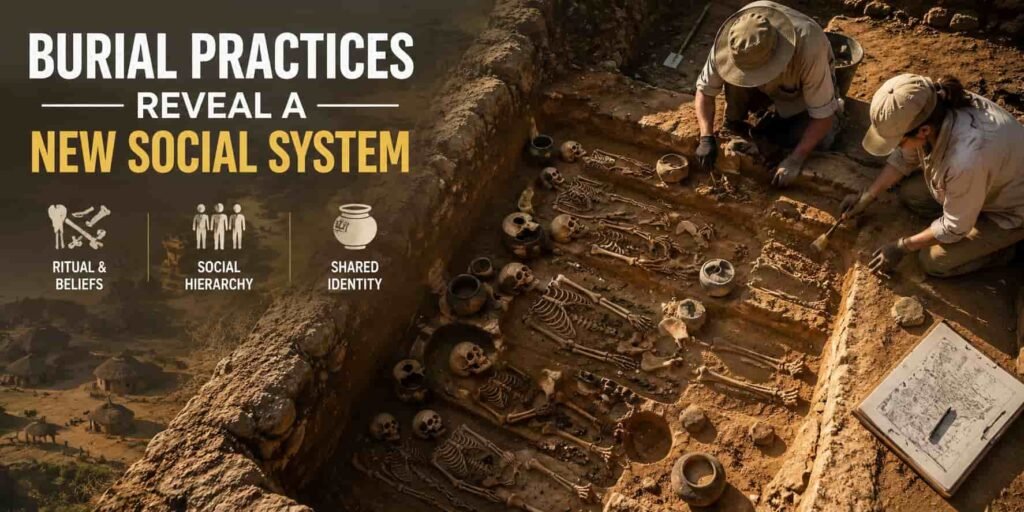
The later burials followed a very different pattern. Fewer individuals were selected for burial, and most belonged to one dominant male family line. This change points to a new form of social organisation, possibly based on male ancestry, inherited status or greater control by a smaller group.
Frederik Valeur Seersholm explained that the arrival of a new population did more than change the region’s genetic ancestry. It also transformed how communities were organised and how people selected individuals for burial.
Population Collapse May Explain the End of Megalithic Culture
The discovery supports growing evidence that the Neolithic population decline was not limited to one small area. Similar demographic changes appear to have affected much of northern and western Europe, including regions beyond Scandinavia and northern Germany.
This wider crisis may help explain why people stopped constructing megalithic tombs, stone chambers and other large prehistoric monuments at around the same time.
Researchers found that the decline of monumental building closely matched the disappearance of the communities responsible for creating these structures. As the original megalith builders vanished, their architectural traditions, burial customs and social systems also came to an end.
The findings therefore connect population replacement, cultural decline, prehistoric migration and the disappearance of one of Europe’s most important Stone Age traditions.
Read Also: Physicists Reveal Fractional Fermi Sea [Quantum]Summary: Why Europe’s Megalith Builders Collapsed [Ancient DNA]
Ancient DNA from a megalithic tomb near Paris reveals a major population collapse around 3000 BC.The original Stone Age farming communities were largely replaced by newcomers linked to southern France and the Iberian Peninsula.Evidence of plague, relapsing fever, environmental stress and high deaths among young people suggests a severe crisis.Burial customs also changed from extended family groups to a selective system dominated by one male lineage.This population shift may explain the decline of Europe’s megalith builders and the end of large stone monument construction.